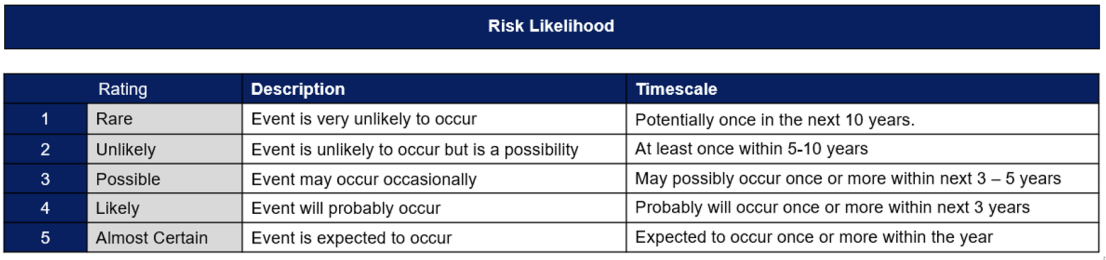
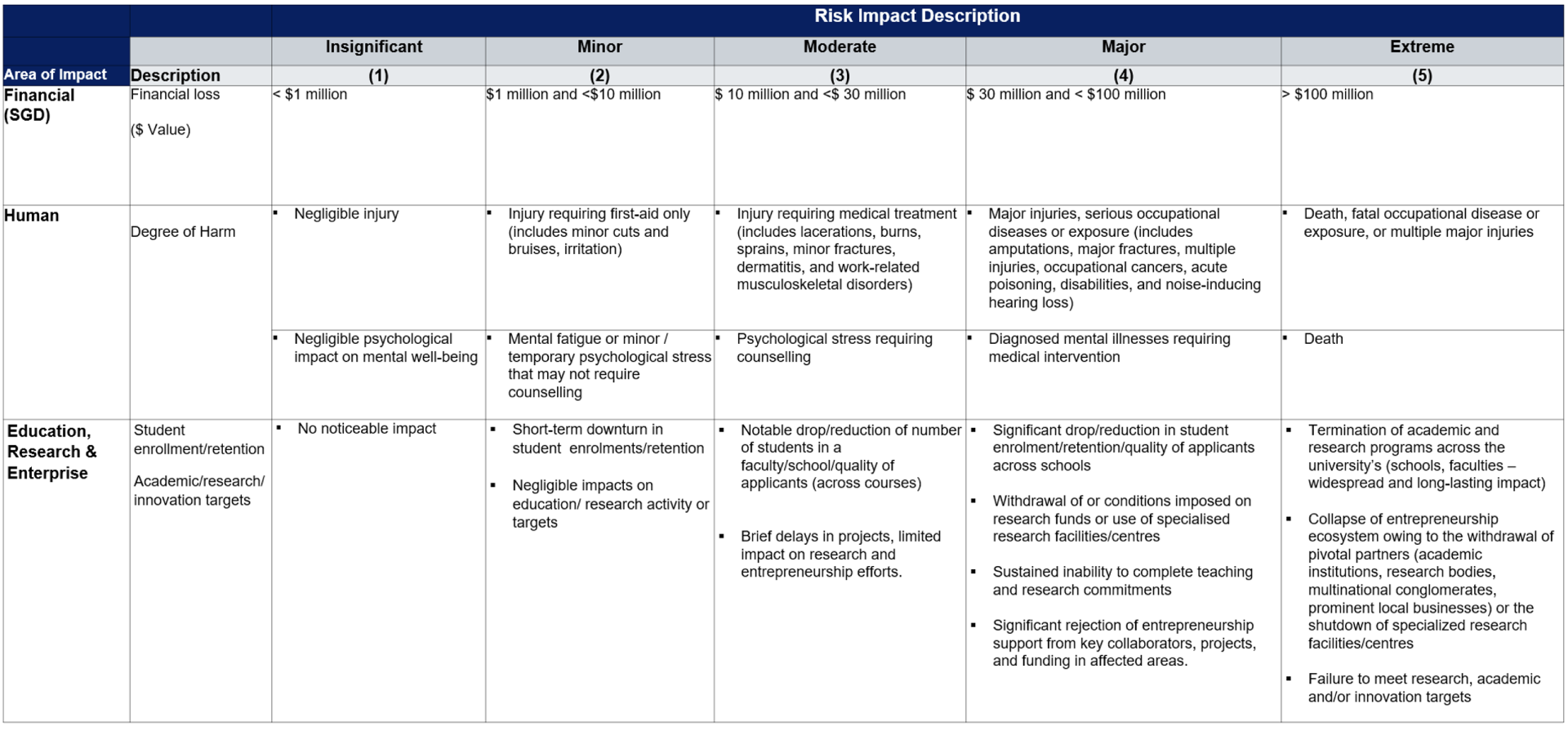
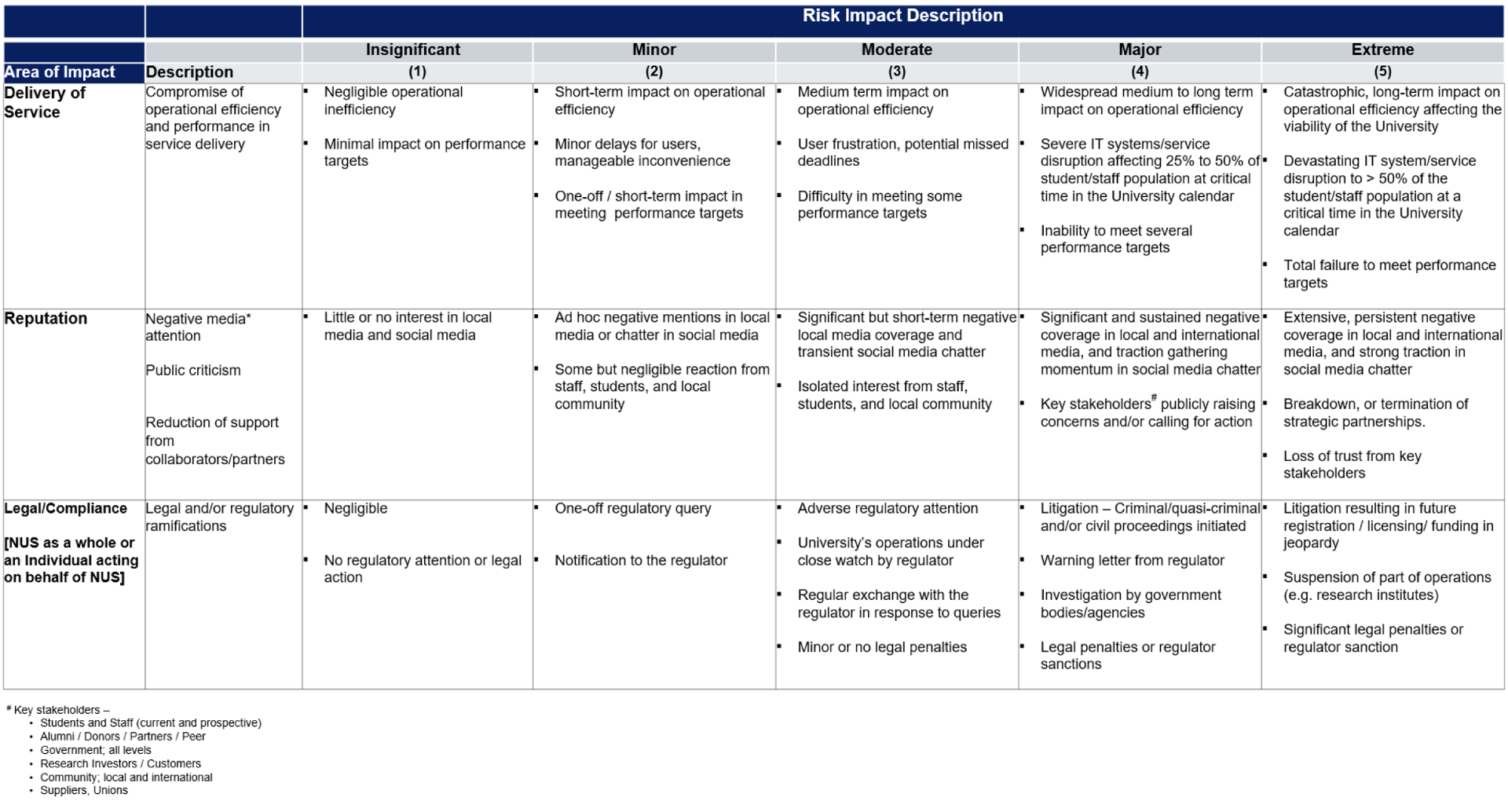
NUS uses a 5×5 risk matrix to evaluate the likelihood and impact of risks, enabling an appropriate risk treatment and, thereafter, monitoring and reporting. The RAM is used for risk assessment at all levels within the university, including operational, and daily routines.
Tables A and B offer more specifics on defining likelihood and impact ratings. These descriptions of risk likelihood and impact are intended to guide staff in determining the risk rating levels (i.e., Low, Medium, High, and Critical) of identified risks. The assessment of likelihood and impact is mostly subjective but can be informed by data, insights collected, expert judgment, and a range of other available internal and external information. Please note the impact descriptions should be read as “or” and not as “and”.
Risk Score Calculation
The impact score for each area is assessed and the area with the worst score is multiplied by the likelihood score to derive the overall risk score.
Table A – Risk Likelihood
Table B – Risk Impact
Notes: The Office of Risk Management and Compliance (ORMC) will review the RAM, a living document that will be reviewed and updated periodically to reflect changes in the internal and external environment, ensuring risk assessment remains dynamic and adaptable.